Scale SEO Pages with AI: The Programmatic SEO 2.0 Playbook
13,247 pages. That's how many indexed pages we have right now. We're two founders. No content team. No SEO agency. No magic.
Just a system. A repeatable, scalable system that turns structured data into pages that actually rank. We call it Programmatic SEO 2.0, and it's the single biggest growth lever we've found as bootstrapped SaaS founders.
Here's exactly how it works.
TL;DR: We scaled our SEO to over 13,000 pages using a refined programmatic approach. It's about structured content, audience-centric design, and leveraging AI intelligently to build a compounding organic growth engine without hiring a marketing team.
{{youtube:Sxn1ji7vYzU}}
Why Traditional SEO Fails Solo Founders
Content marketing, as traditionally taught, is a grind. You're told to "blog consistently," "create pillar pages," and "build backlinks." Great advice if you have a team of five content writers and an SEO manager.
For solo founders, it's unrealistic. You spend 80% of your time perfecting the product. The remaining 20%? If you're lucky, it's customer support or a quick bug fix. Marketing gets whatever scraps of attention are left.
When you do try, it feels like shouting into the void. A couple of blog posts, a few social media updates. Crickets. The ROI just isn't there for the effort.
Traditional, manual content creation is unsustainable for bootstrapped SaaS founders. Full stop.
Programmatic SEO 1.0: Good Idea, Flawed Execution
Programmatic SEO isn't new. The basic idea: generate thousands of pages from structured data. Think directories, schema-rich lists, or city guides.
Early versions often felt spammy. Thin content, ugly pages, purely keyword-driven with little thought for the user. Search engines got smarter, and many of these sites were penalized.
We saw the potential, though. The core principle (scaling content generation through data) was sound. It just needed a massive upgrade.
PSEO 1.0 vs 2.0
| Feature |
PSEO 1.0 (Old Way) |
PSEO 2.0 (Our Way) |
| Content Quality |
Often thin, keyword-stuffed |
High-quality, audience-centric, AI-enhanced |
| User Experience |
Poor, templated, ugly |
Designed for readability and value |
| Strategy Focus |
Purely keyword volume |
Problem-solution, user intent, long-tail |
| Scalability |
Moderate, often manual iteration |
Extreme, AI-driven, data-first |
| Sustainability |
Risk of penalization |
Built for long-term organic growth |
Programmatic SEO 2.0: How It Actually Works
Programmatic SEO 2.0 is fundamentally different. It's not about tricking search engines. It's about systematically serving user intent at scale. Creating genuinely helpful, structured content that also happens to rank.
Each page isn't just an article. It's a tailored solution to a specific user problem, generated and optimized with intelligence.
The Foundation: Structured Data
The absolute core is structured data. We're not just writing prose. We're defining entities, relationships, attributes, and user problems in a systematic way.

Think CSVs or databases, not Google Docs. This data feeds our generation engines and templating systems. It's the blueprint for every single page.
Start by identifying the atomic units of information your audience needs. For us, it was marketing terms, SaaS tools, and specific problems SaaS founders face.
Step 1: Mapping User Intent to Data Models
Before writing a single line of code or generating any AI content, we spent weeks defining our audience's deep needs. We used our own pain points as solo founders and talked to others.
What are they searching for? What questions do they have? What problems are they trying to solve right now?
When a founder searches for "what is SEO ranking," they need a clear, concise definition. Not a 3,000-word essay. Our SEO Glossary pages are built precisely for this.
When they search for "ActiveCampaign alternatives," they need a comparison. Not just a list, but a side-by-side analysis of features, pricing, and who each tool is best for. Our comparison pages tackle this head-on.
Our Initial Data Models:
- Term Definition Model:
term_name, short_description, long_description, related_terms, category. (Example: What is Programmatic SEO?)
- Tool Comparison Model:
tool_1_name, tool_2_name, features_matrix, pricing_comparison, pros_tool_1, cons_tool_1. (Example: Klaviyo vs Mailchimp)
- Tactical Guide Model:
guide_topic, problem_statement, steps_array, examples_array, best_practices. (Example: How to build a SaaS waiting list)
- Problem/Solution Page Model:
target_audience, pain_point, solution_overview, feature_benefits. (Example: For SaaS Founders)
This upfront work is non-negotiable. It's the bedrock. Without it, you're just generating noise.
Step 2: The Data Collection & Curation Engine
Once we had our data models, the next challenge was populating them. There's a common misconception that AI automates everything. It doesn't. You still need quality input.
We combined several approaches:
- Manual Curation: For our initial ~100 glossary terms, we wrote the core definitions ourselves. This ensures accuracy and consistency in tone.
- API Integrations: For tools, we pulled data directly from public APIs where available. This gets features, pricing tiers, and integrations.
- AI-Assisted Expansion: We feed our initial curated data points into LLMs with very specific prompts. For example: "Given this
term_name and short_description, expand into a 300-word long_description suitable for a SaaS audience."
AI is an incredible accelerator, not a replacement for good data. Your data quality dictates your page quality.
Step 3: Prompt Engineering for SEO-Optimized Content
This is where Programmatic SEO 2.0 truly shines. We don't just ask an AI to "write a blog post about X." That rarely yields great results.
Instead, we craft highly specific, multi-layered prompts that guide the AI to generate content that's:
- Accurate: Based on our structured data.
- Helpful: Directly addressing user intent.
- SEO-friendly: Incorporating target keywords naturally.
- Engaging: Written in a conversational, founder-friendly tone.
- Structured: Adhering to specific headings, bullet points, and lengths.
We generate dozens, sometimes hundreds, of content variations based on our data models for review. Then we (the founders) review and edit for tone, accuracy, and flow. This "human-in-the-loop" approach is crucial.
AI is a powerful content generator, but it requires precise prompt engineering and human review to produce high-quality content.
Step 4: The Templating & Publishing Engine
This is the "programmatic" part. Once we have structured data and AI-generated content blocks, we assemble them into pages.

We use a dynamic templating system. Each page type (glossary, comparison, guide, tool) has a predefined template structure. The templates pull data dynamically from our content database.
A glossary page has fixed elements: header, H1 for the term, an AI-generated definition, a "Why it matters" section, and a sidebar for related terms. The content inside these blocks is bespoke for each term.
This ensures consistency in design, navigation, and structure across thousands of pages. It also means we can update the core template once, and it propagates to every page.
Invest heavily in accessible, mobile-first design for your templates. Programmatic SEO means a lot of pages, so UI consistency and performance are paramount.
Step 5: Semantic SEO & Internal Linking at Scale
One of the biggest advantages of a structured data approach is the ability to implement advanced semantic SEO and internal linking strategies automatically.
Every generated page incorporates structured data (JSON-LD). This explicitly tells search engines what the page is about.
Our glossary terms are marked up with schema.org/DefinedTerm or schema.org/Article. Our comparisons use schema.org/Product or schema.org/CompareAction.
More importantly, it enables highly targeted internal linking. When our AI generates content mentioning "search engine optimization," it knows to link to "SEO" in our glossary. This isn't manual. It's built into the system.
As new pages are added, the internal linking mechanism automatically scans for relevant keywords and concepts, then inserts contextual links. This creates a dense, relevant internal link graph.
Our JSON-LD Strategy
We use specific schema types per content category:
- Glossary:
DefinedTerm, Article, FAQPage
- Comparisons:
Product, Review, HowTo
- Guides:
HowTo, Article
- Tools:
SoftwareApplication, Product
This level of detail helps search engines understand the purpose and value of each page.
Step 6: Iteration, Monitoring, and Expansion
Building 13,000 pages isn't a "set it and forget it" operation. It's continuous.
Key Activities:
- Keyword Gap Analysis: Find new long-tail keywords and questions your audience is asking but you aren't yet ranking for.
- Performance Monitoring: Track traffic, rankings, and conversions for each page type. Which glossary terms perform best? Which comparison pages are driving sign-ups?
- Content Refresh: AI-generated content can become outdated. Periodically refresh data points (pricing for tools, for instance) and re-run AI generation.
- UI/UX Improvements: Constantly refine page templates based on user behavior data. A better user experience often correlates with better SEO.
- New Content Ideas: The ideas database is constantly growing, either manually curated or AI-generated based on trends.
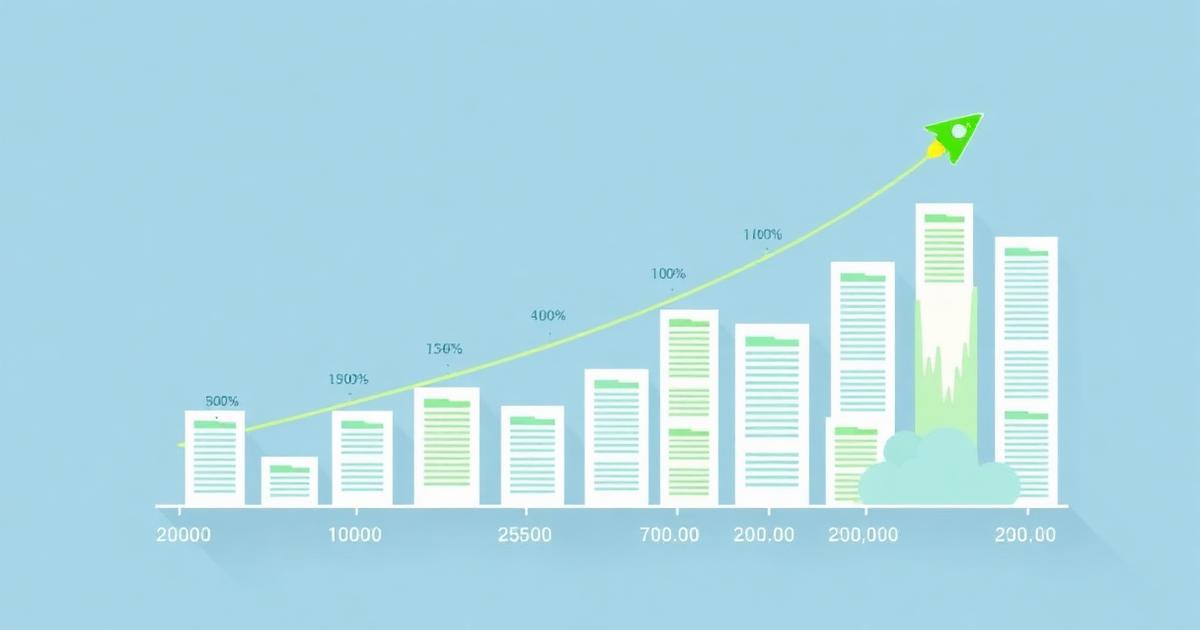
We started with ~500 pages. Within 6 months, we scaled beyond 13,000. Not magic. Just this systematic, iterative approach.
Common Mistakes in Programmatic SEO
We learned a lot of lessons the hard way. Here are the most common pitfalls:
- Ignoring User Intent: Sending people to a generic product page when they're searching for "how to x" won't work.
- Thin Content: Thousands of pages with 50-100 words of generic text. Google is smarter now.
- Over-reliance on AI without Human Review: AI makes mistakes. It hallucinates, misinterprets, and can sound robotic. Human oversight is essential.
- Poor UX/UI: Slapping together ugly, unreadable pages. If users bounce immediately, your rankings suffer.
- Lack of Internal Linking Strategy: Thousands of orphaned pages that don't funnel users or link juice.
- No Clear CTA: Even a glossary term needs a "What next?"
- No Monitoring or Iteration: Launching and forgetting.
- Trying to Game the System: Volume over quality eventually leads to penalties.
| Mistake |
PSEO 1.0 (Old Way) |
PSEO 2.0 (Our Way) |
| Content Quality |
Quantity over quality |
Quality and quantity |
| Human Review |
Minimal or none |
Essential for every content type |
| UX Design |
Afterthought |
Integrated from beginning |
| Goal |
Ranking for keywords |
Solving user problems, then ranking |
| Sustainability |
Short-term gains, high risk |
Long-term asset, compounding returns |
Scaling Beyond 13,000 Pages
Our current 13,000+ pages are just the beginning. We're continually expanding:
- Expanded Problem/Solution Pages: Diving deeper into niche founder pain points.
- Interactive Tools: Building more utilities like our SEO calculators that solve user problems directly on the page.
- Localized Content: Scaling content for different regions or languages.
- User-Generated Content: Integrating community contributions in a structured way.
Each new page is designed to solve a very specific problem for a very specific founder. It's about building an indispensable resource center.
The Bottom Line
Programmatic SEO 2.0, powered by intelligent AI and a rigorous data-first approach, has transformed our website into a massive, compounding asset. It has attracted thousands of visitors seeking answers, tools, and guidance.
You don't need a massive marketing budget or team to dominate organic search. You need smart strategy, structured data, and the discipline to review what the AI produces before hitting publish.
This approach requires upfront work, meticulous data curation, and a commitment to quality. But for solo SaaS founders who are product-focused and need to scale marketing efficiently, it's the highest-leverage play available. Now go build your own content engine.
Related Reading
FAQ
What is programmatic SEO for SaaS?
Programmatic SEO is the practice of creating hundreds or thousands of search-optimized pages automatically using templates and data. For SaaS companies, this means generating comparison pages, alternative pages, glossary entries, and use-case pages at scale using AI and structured data.
Is programmatic SEO still effective in 2026?
Yes, but the bar has risen. Google now penalizes thin, auto-generated content. The key is combining programmatic templates with AI-enhanced unique content for each page — what we call Programmatic SEO 2.0. Each page must provide genuine value beyond just keyword targeting.
How many pages should I create with programmatic SEO?
Start with 20-50 pages in a single category (e.g., comparisons or alternatives) and monitor indexing and ranking performance for 4-6 weeks before scaling. Quality matters more than quantity — 50 well-crafted pages outperform 500 thin ones.
What tools do I need for programmatic SEO?
You need a content template system, a data source (competitor databases, keyword research tools), and an AI model for generating unique content per page. Most SaaS founders can implement this with their existing tech stack plus tools like SaaS Sidekick for content generation.
{{stat:10x|more programmatic SEO pages can be created with AI vs. manual writing (SaaS Sidekick data)}}
Related